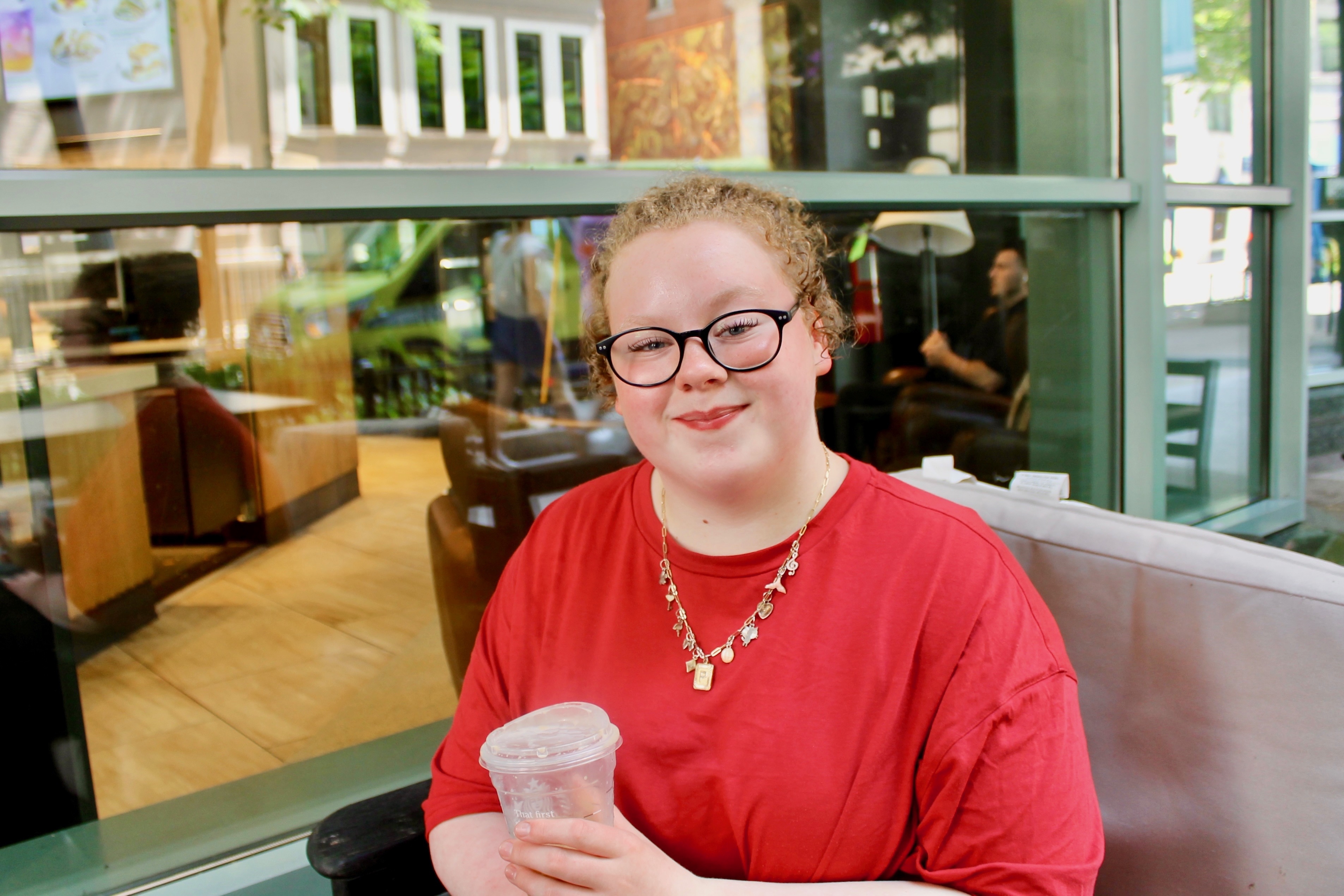
Hunger Awareness and Advocacy • Youth Ambassador • 5 min read • Sep 21, 2026, 9:15:00 AM • Written by: Paley Schrooten
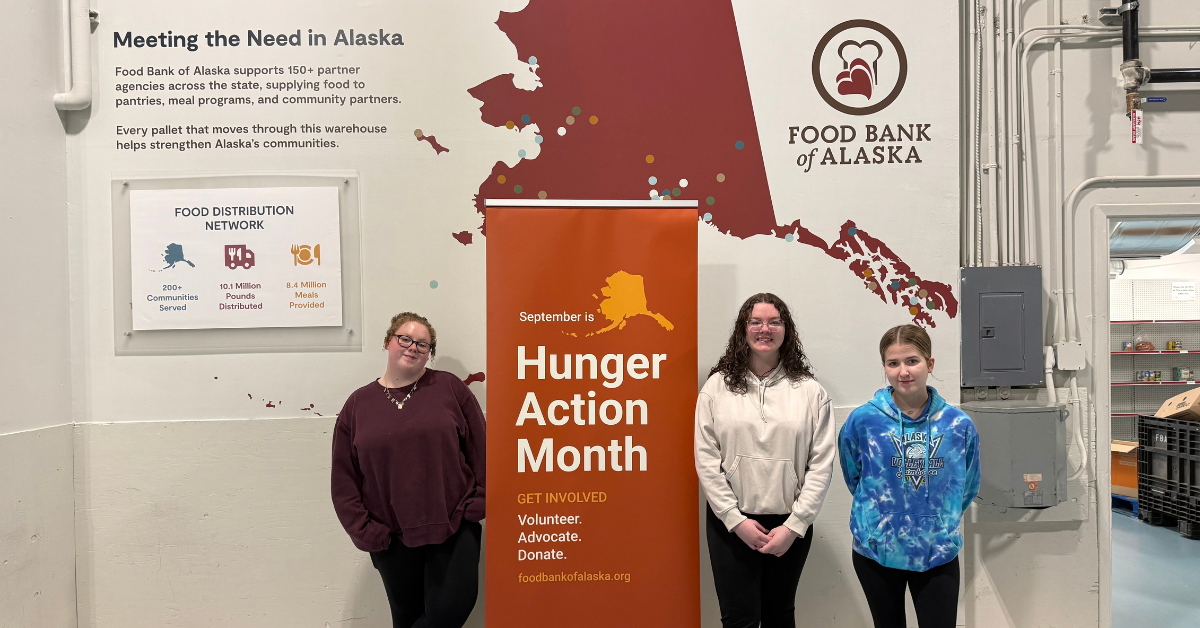
We’re Ava, Maddie, and Paley, youth ambassadors with Food Bank of Alaska. Ava and Maddie are in 10th grade, and Paley is in ninth grade. For Hunger Action Month, we learned about and took part in “Follow the Food,” an experience that allows us to see the whole process of rescuing food from the grocery store to handing it out to neighbors at a Mobile Food Pantry.
We started by going with one of the drivers on their route to pick up food from the grocery store. The food is usually waiting for them in big bins in the back of the store. The food is pallets full of produce, bakery items, ready to eat deli items, and flowers. Some of the produce was grouped together in packages, but sometimes the fruit and vegetables were all mixed together in a box. The food can't be passed out to neighbors that way, so all the food was brought back to the warehouse to be weighed and sorted. Then, we and a large group of volunteers packed bags and handed out groceries at a mobile food pantry, following the process from donation to distribution.
Before this experience, we understood the purpose of a food bank. What we hadn’t seen was how much work it takes to get donated food into someone’s hands. This experience gave us an inside look at that work and the role we played.
Looking at grocery stores differently
The food that the grocery store donates is usually odd shaped stuff that doesn't sell or when the store purchases too much from a wholesaler and can't sell it all before it goes bad. Donating it to the food bank means that food can help someone instead of the food going into a landfill. But getting it out of the store is only the beginning of the process.
Back at the food bank, we participated in a volunteer activity called food reclamation, which is the process of checking and sorting donated food to determine what can be distributed. We had to check it for mold, bad bruises, and more to make sure the food we collected would be good enough to give to families. Food that wasn't safe to eat would go into a separate bin that livestock farmers would come to collect to feed to their pigs. The food bank calls it "pig food." 🐷
For Paley, the pick up and food reclamation process really changed how she thinks about food waste. In one day, the truck driver picked up an entire truckload with big pallets of food. If the food bank didn't exist, that food would go into the landfill.
Mobile Food Pantries and "Bagging"
Most of the food we sorted was put onto pallets and then put in the big fridge room where it would be distributed to families at the Mobile Food Pantries that were happening over the weekend. The rest of the food needed to be sorted and bagged up for the Mobile Food Pantry happening that same night in Mountain View at Clark Middle School. We got to work with a new set of volunteers this time, and we all lined up in an assembly line to put ready to eat food into bags, because not everyone has a car to drive their groceries home in. And since not everyone has a kitchen to prepare meals in, most of the food in the bags were ready to eat like prepared food from the deli, fruits, vegetables, and other random things.
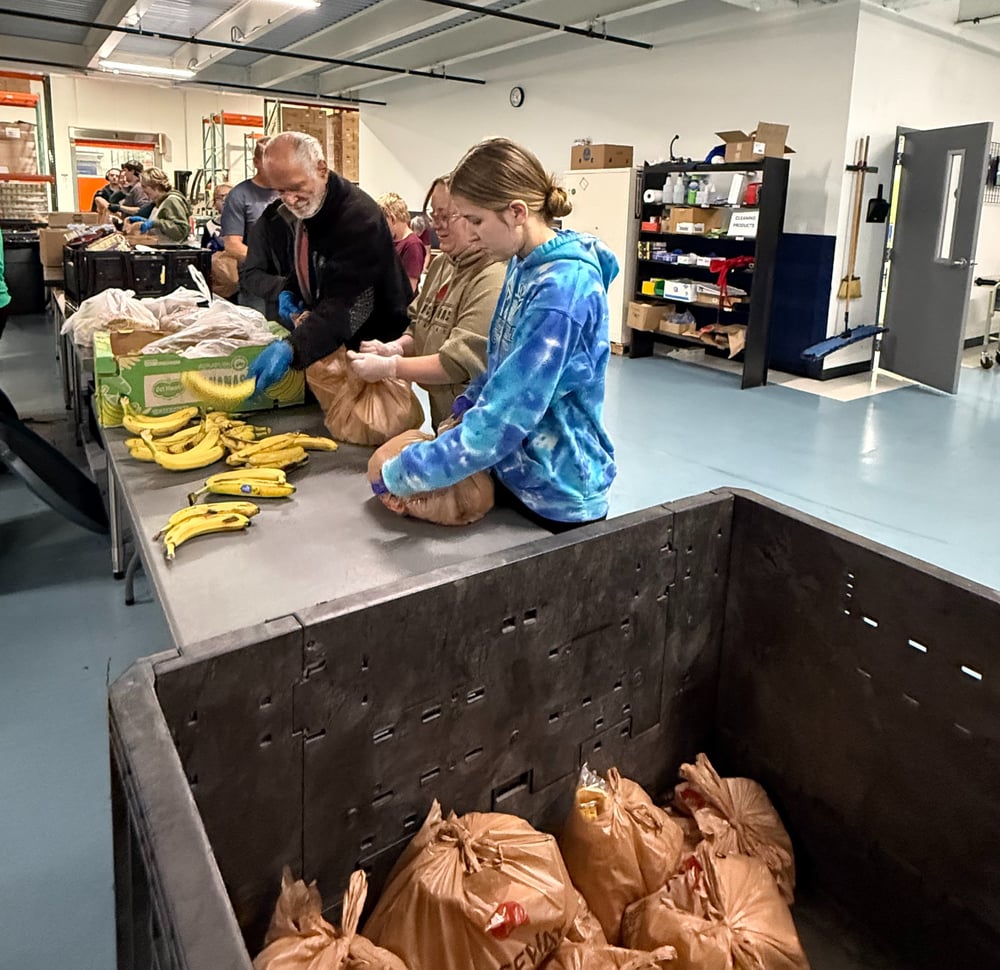
For Ava, knowing those bags were going home with someone who would eat it that same night made the work feel more special and personal.
We understood after doing this activity why volunteers are an important part of food bank work. Preparing and sorting food takes time, and every person helping moves that work forward.
Seeing the process come full circle
At the mobile food pantry, we helped hand out groceries.
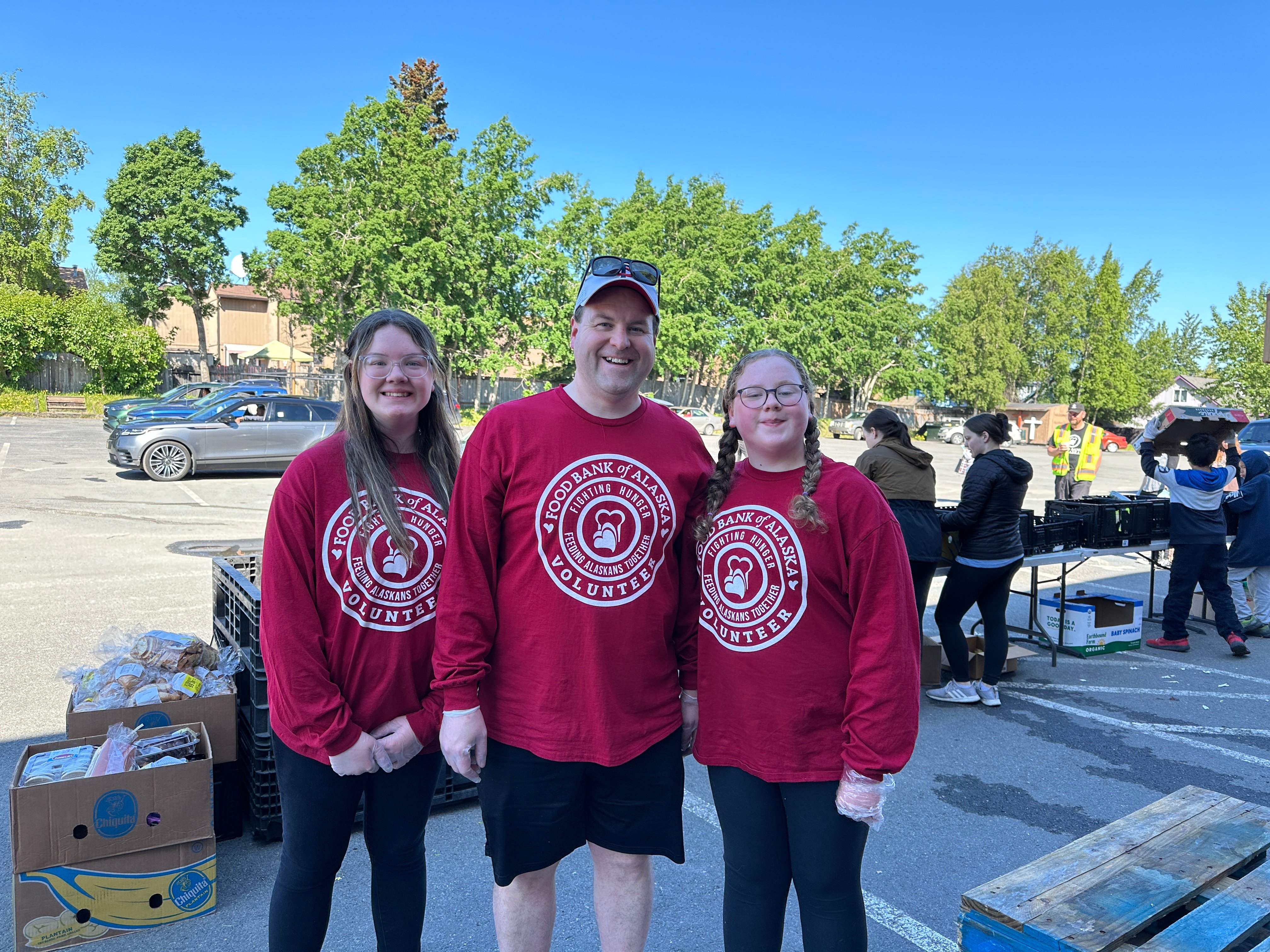
For Maddie, this was her favorite part, and what brought everything together. We helped load about 300 boxes of food into peoples cars on Saturday morning. There were people of all ages, and some had bigger families and needed more food. Even though we sorted food at the food bank, we also sorted it again at the Jewel Lake Church of the Nazarene Mobile Food Pantry to make sure the food was still good. We had to wear gloves, and anything that was dropped on the ground or contaminated had to go into a separate box to go to the livestock farms because it was no longer safe to eat. The people that do this work every weekend are really good about keeping the line moving, and determining how much food goes into each car.
What we want other people to know
The biggest thing we want to share is how much food safety happens. When the food is picked up, it gets wrapped and then put into a refrigerated truck. All the volunteers must have clean hands and wear gloves. Every item is carefully sorted and reviewed multiple times.
Learning about food rescue also made us think more about food waste. We’re more aware that food can have another use, even if it isn’t going to be sold at a store.
What we want other students to know
You don’t need to understand the entire food system before you can contribute. Volunteering gives you a way to learn about it while doing something meaningful
The “Follow the Food” experience gave us a better understanding of how food banking works, along with who needs the food, how to properly handle food, and how to reduce food waste.
Now, when we see a grocery donation or a packed bag of food, we have a better idea of the work behind it. We’re proud to have been part of that process, and we want to keep learning through the work.